Horry County Dog Registration Information
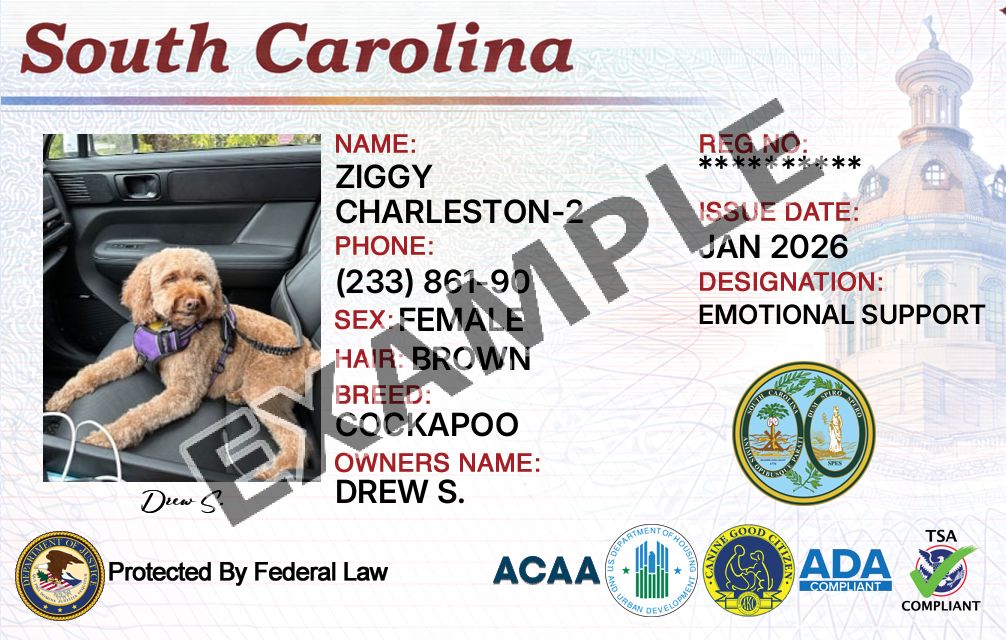
Service Dogs and Emotional Support Animals in Horry, South Carolina
If you’re searching where do I register my dog in Horry County, South Carolina for my service dog or emotional support dog, the most important thing to know is this: dog licensing (when required) is typically local (county or city), while service dog and emotional support animal (ESA) status are legal classifications that generally do not come from a county “registration” office.
This page walks you through how a dog license in Horry County, South Carolina is commonly handled, which official offices to contact, what rabies documentation usually matters most, and how to avoid confusing a local license or rabies tag with service dog or ESA status.
- A local dog license (if required where you live) is different from a rabies tag issued after vaccination.
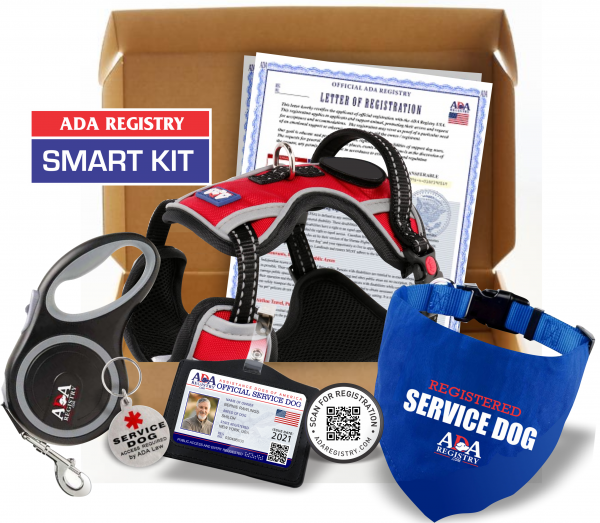
- A service dog is not made “official” by buying a license, purchasing an online certificate, or adding a vest.
- An emotional support animal is not a “service dog,” and generally does not get public-access rights.
Where to Register or License Your Dog in Horry County, South Carolina
Because dog licensing rules are often city-specific (and enforcement is often tied to animal control or rabies/public health processes), start with the office that serves your exact address. The official offices below are common starting points for animal control dog license Horry County, South Carolina questions, rabies enforcement questions, and general guidance on where to register a dog in Horry County, South Carolina.
Horry County Animal Care Center (County Animal Services)
Use this office for county-level animal services questions, including who enforces local pet ordinances outside city limits, and what documentation they recommend keeping with your dog (especially rabies documentation).
Horry County Animal Control (County Enforcement)
If your question is really about compliance (running-at-large issues, nuisance complaints, or enforcement), this is often the correct county contact—particularly if you live outside a city police jurisdiction.
City of Myrtle Beach Police Department — Animal Control Unit
If your residence is within Myrtle Beach city limits, city animal control is often the right place to ask whether a city license is required and what documentation they expect on-file or available upon request.
City of North Myrtle Beach — Police Dispatch (Animal-Related Complaints)
If you live inside North Myrtle Beach city limits, start here for direction on the correct city office or process for animal-related rules (including loose dogs, barking complaints, and how the city routes licensing questions).
Overview of Dog Licensing in Horry County, South Carolina
Dog licensing is usually local (county or city)
In many places, the term “dog registration” is used casually to mean one of several different things: (1) a city or county dog license (a local requirement that may or may not apply to your exact address), (2) a rabies tag issued by your veterinarian after vaccination, or (3) a “service dog/ESA registration” sold by third parties (which is not an official government licensing process).
In Horry County, animal services and enforcement are handled through county animal services resources, while some municipalities inside the county (for example, Myrtle Beach or North Myrtle Beach) may handle animal control and related requirements through city departments. That’s why the best first step is confirming whether you fall under county jurisdiction or a specific city’s jurisdiction.
Rabies compliance is a statewide requirement
Separate from any local license rules, South Carolina requires dogs (as well as cats and ferrets) to be kept up to date on rabies vaccination. When your pet is vaccinated, you generally receive a rabies certificate and a rabies tag for the collar. Keeping the tag on the collar and the certificate available is a practical way to show compliance if you’re ever asked by animal control or if your dog is involved in a bite incident.
How Dog Licensing Works Locally in Horry County, South Carolina
Step 1: Identify which jurisdiction applies to your address
“Horry County” can mean unincorporated county areas or a city within the county. Your local requirements can differ depending on whether you live in: unincorporated Horry County (typically handled through county animal services and county animal control) or within a municipality (often handled by city animal control or a police department division).
Step 2: Ask what the local “license” actually is in your area
Some communities require a paid annual license tag, while others focus on rabies compliance and nuisance/run-at-large enforcement. When you call, ask these exact questions:
- Do you require a paid dog license for residents at my address?
- If yes, where is the license purchased and renewed (in person, online, by mail)?
- What documents must I show (rabies certificate, proof of spay/neuter, ID, proof of residency)?
- Do you issue a separate license tag, or is the rabies tag considered sufficient for local compliance?
- Are service dogs exempt from any local licensing fee, and what proof (if any) is allowed to be requested?
Step 3: Keep records that animal control and housing providers typically request
Even if your local area does not emphasize a paid license, there are situations where you’ll want clear records: picking up a stray hold, resolving a bite investigation, obtaining a pet-friendly rental, or requesting a reasonable accommodation. At minimum, keep a copy of your rabies certificate and your veterinarian’s contact information.
Common confusion: rabies tag vs. dog license
A rabies tag is issued when your veterinarian vaccinates your dog. A dog license (when required) is typically a local government registration. You can have a current rabies tag and still be subject to local licensing rules—or you may discover your locality treats rabies compliance as the key requirement. That’s why confirming directly with the correct office is essential for a precise answer to where to register a dog in Horry County, South Carolina.
Service Dog Laws in Horry County, South Carolina
A dog license is not what makes a service dog “legal”
A service dog is generally defined by what the dog is trained to do: the dog must be trained to perform specific tasks or work for a person with a disability. Local licensing offices do not “approve” service dog status the way a motor vehicle office issues a driver’s license. In other words: buying a dog license in Horry County, South Carolina (if your locality requires one) does not convert a pet into a service dog.
What you can be asked (and what you typically cannot be forced to show)
In many public-access situations, staff may be allowed to ask limited questions to confirm the dog is a service animal, but they typically cannot require a special “service dog registration card,” demand medical records, or insist on a vest as proof. Local rules about dog control, vaccinations, and behavior still apply to service dogs—especially if the dog is out of control or poses a safety risk.
Local compliance still matters for service dogs
Even though service dog status is not issued by a county office, a service dog may still need to comply with the same local requirements as other dogs: rabies vaccination, nuisance/run-at-large rules, and any applicable local licensing process. If you’re asking where do I register my dog in Horry County, South Carolina for my service dog, the practical answer is: register/license the dog (if required) with the same local office that handles all dogs for your address, then keep rabies proof current.
Emotional Support Animal Rules in Horry County, South Carolina
An ESA is not the same as a service dog
An emotional support animal (ESA) provides comfort by its presence, but it is not trained to perform specific tasks the way a service dog is. Because of this difference, ESAs generally do not have the same public-access rights as service dogs. This is where many people get stuck when searching where do I register my dog in Horry County, South Carolina for my emotional support dog: they’re looking for a government “ESA registration,” but that typically isn’t how ESA status works.
What “registration” usually means for an ESA
In most cases, what matters for an ESA is not a county license label; it’s whether you can request a housing accommodation. Housing providers may require documentation consistent with applicable housing rules, but a purchased online certificate is often not the determining factor.
ESAs still must follow local animal rules
Even if your dog is an ESA, the dog still needs to follow the same local requirements that apply to other dogs in your area—especially rabies vaccination, control requirements, and any city or county licensing rules. When in doubt, contact the appropriate local office listed above and ask what they require for a standard pet dog license (or equivalent local compliance) at your address.
Frequently Asked Questions
Register A Dog In Other South Carolina Counties
Select your county below to get started with your dog’s ID card. Requirements and license designs may vary by county, so choose your location to see the correct options and complete your pup’s registration.
- Abbeville County Dog Registration
- Aiken County Dog Registration
- Allendale County Dog Registration
- Anderson County Dog Registration
- Bamberg County Dog Registration
- Barnwell County Dog Registration
- Beaufort County Dog Registration
- Berkeley County Dog Registration
- Calhoun County Dog Registration
- Charleston County Dog Registration
- Cherokee County Dog Registration
- Chester County Dog Registration
- Chesterfield County Dog Registration
- Clarendon County Dog Registration
- Colleton County Dog Registration
- Darlington County Dog Registration
- Dillon County Dog Registration
- Dorchester County Dog Registration
- Edgefield County Dog Registration
- Fairfield County Dog Registration
- Florence County Dog Registration
- Georgetown County Dog Registration
- Greenville County Dog Registration
- Greenwood County Dog Registration
- Hampton County Dog Registration
- Jasper County Dog Registration
- Kershaw County Dog Registration
- Lancaster County Dog Registration
- Laurens County Dog Registration
- Lee County Dog Registration
- Lexington County Dog Registration
- Marion County Dog Registration
- Marlboro County Dog Registration
- McCormick County Dog Registration
- Newberry County Dog Registration
- Oconee County Dog Registration
- Orangeburg County Dog Registration
- Pickens County Dog Registration
- Richland County Dog Registration
- Saluda County Dog Registration
- Spartanburg County Dog Registration
- Sumter County Dog Registration
- Union County Dog Registration
- Williamsburg County Dog Registration
- York County Dog Registration